
Last updated November 25, 2026
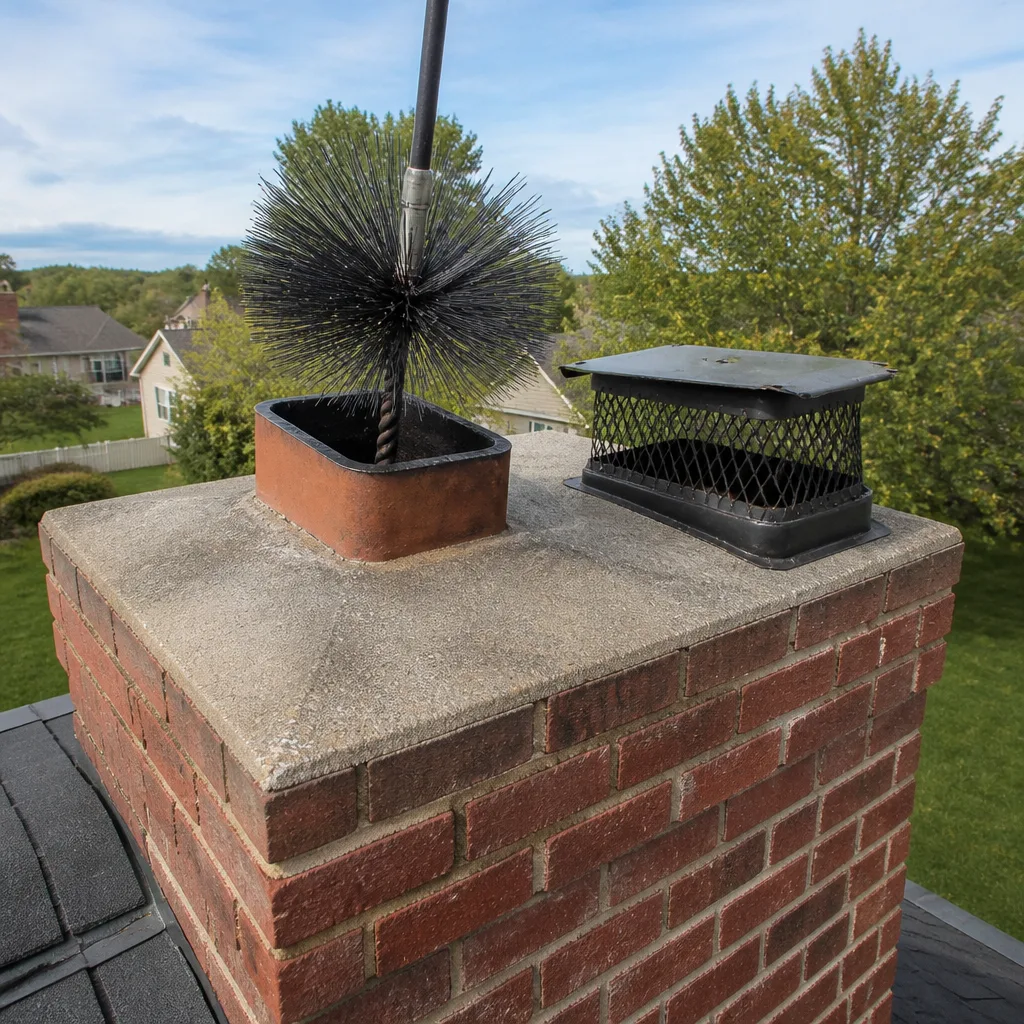 Sweep & inspection
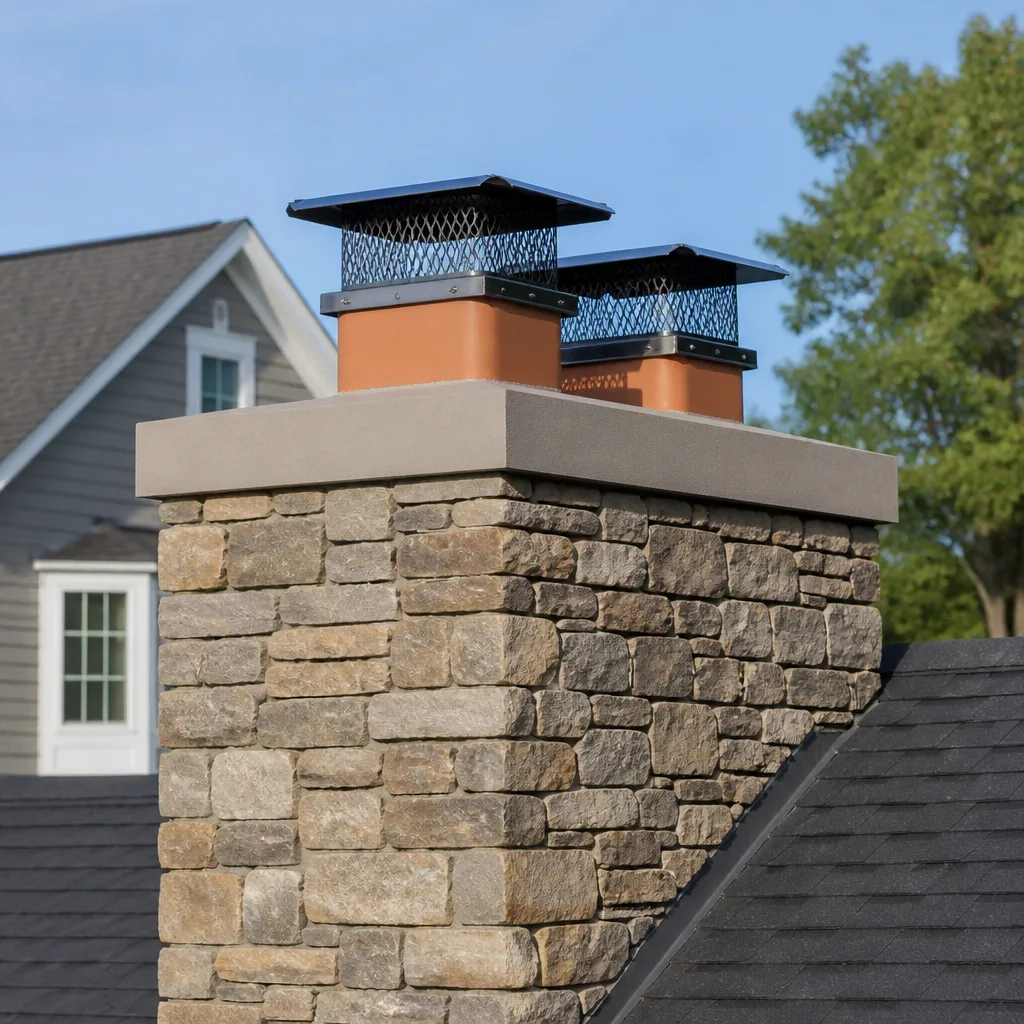 Caps & crowns
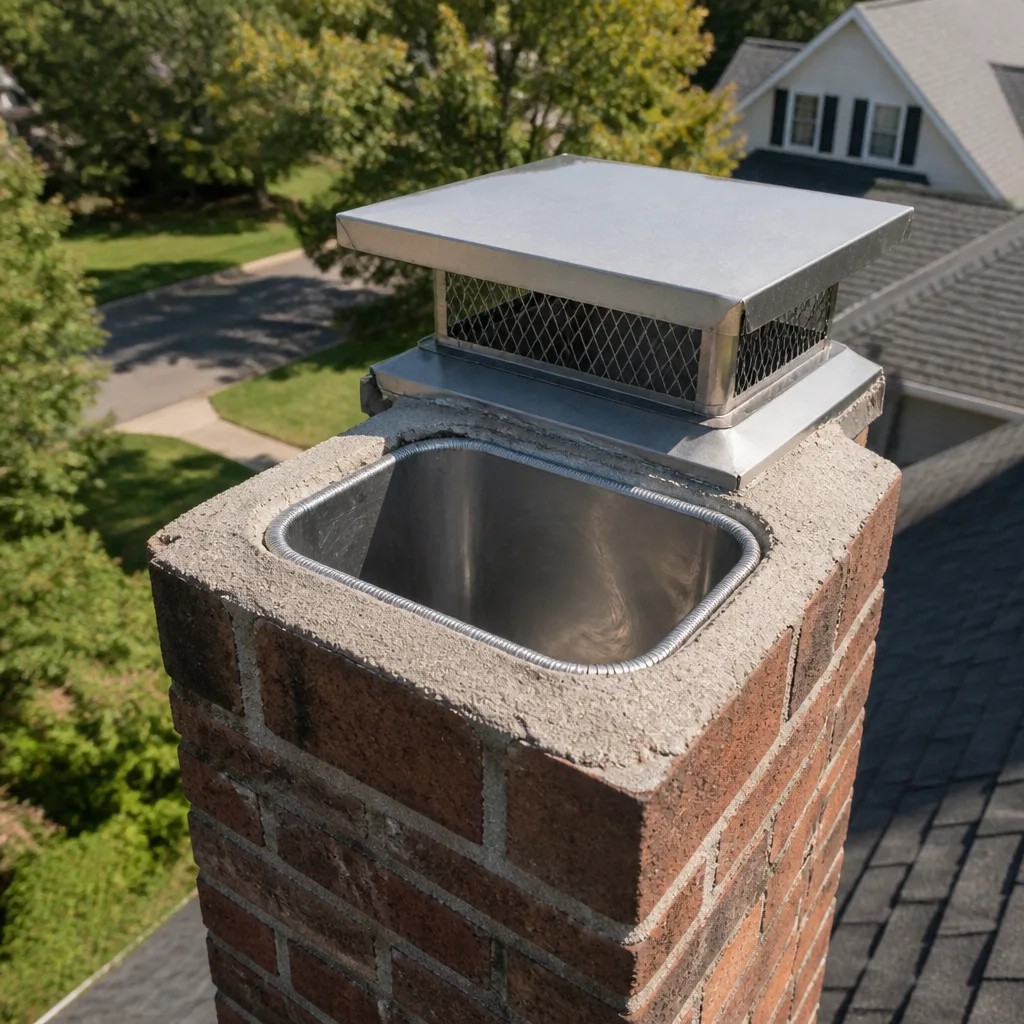 Flue relining
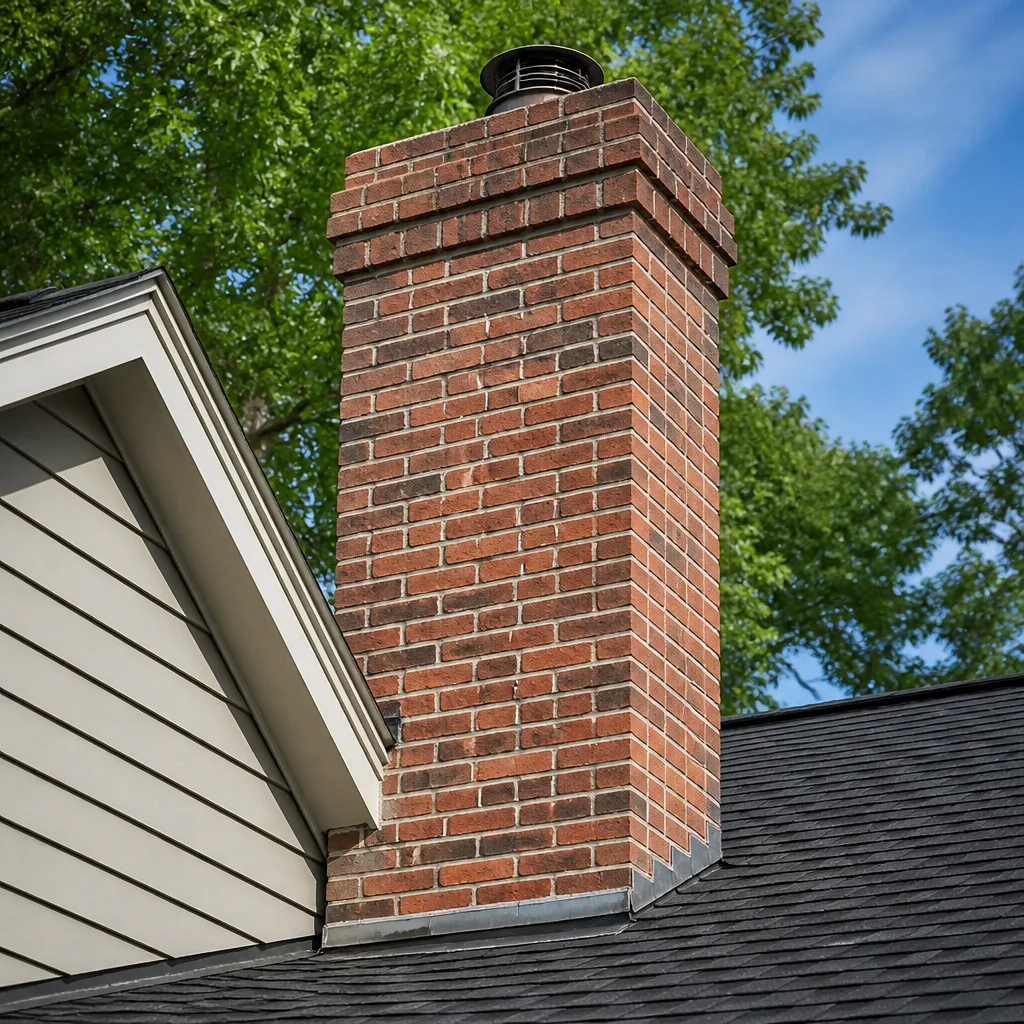 Masonry repair
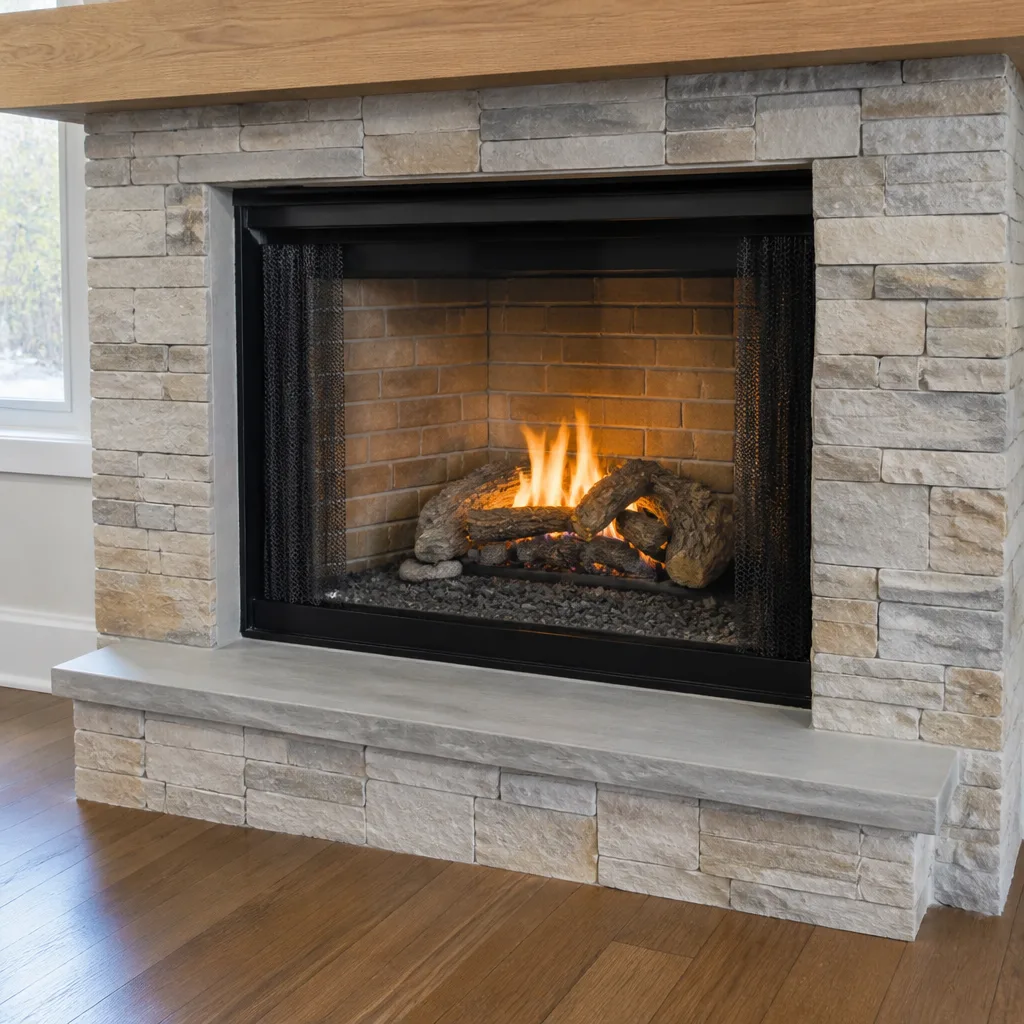 Gas fireplace service
Level 1 sweep and inspection to the NFPA 211 annual standard - flue, crown, cap, and flashing checked and photographed
Chimney sweep logs do not sweep chimneys. They loosen some creosote - which then falls where a brush and vacuum still have to collect it.
Chimney Cleaning Cost Breakdown: The Portola Springs Homeowner’s Reference for 2026
A $79 chimney sweep quote and a $299 quote can both be labeled “chimney cleaning.” The gap between them is almost never about how well someone scrubs. It’s about what’s bundled into the number: a true Level 1 inspection, a camera run of the flue, a written condition report, and a technician who can tell you what they found and why it matters. Strip those out and you’re paying to push a brush, not to learn whether your liner has a crack. This reference breaks down every line item a serious quote in Portola Springs should show in 2026, so you can compare apples to apples and see exactly what you’re buying.
Quick Answer
Chimney cleaning in Portola Springs typically runs $180 to $340 for a standard wood-burning sweep with a Level 1 inspection in 2026, with camera inspections adding $90 to $175 and cap or crown work adding $185 to $600 depending on materials. The single biggest driver of quote variation isn’t labor rates. It’s whether inspection, camera documentation, and a written report are included. Ask any contractor to itemize those three things before you compare totals.
Styles & brands we work with
- Sweep & inspection
- Caps & crowns
- Flue relining
- Masonry repair
- Gas fireplace service
Table of Contents
- What’s Actually on a Chimney Cleaning Invoice?
- 2026 Portola Springs Cost Ranges, Line by Line
- Why Gas Fireplace Cleaning Costs Differ From Wood-Burning
- The Real Cost of Deferring Maintenance
- What Actually Drives Price Variation Between Legitimate Contractors
- How to Tell a Warranted Add-On From an Upsell
- What Happens During a Standard Sweep, Step by Step
- Portola Springs-Specific Considerations
What’s Actually on a Chimney Cleaning Invoice?
A chimney sweep invoice should read like a parts-and-labor statement, not a single lump sum. When a contractor hands you a one-line quote with just a price and a date, that’s your first clue they won’t itemize what they did either. In Portola Springs we’ve seen three quotes for “chimney cleaning” that varied by 300% because each contractor bundled a different set of line items under the same four-word description.
Here are the six line items that appear on a properly structured invoice:
- Basic sweep – brush and vacuum removal of creosote, soot, and debris from the firebox, smoke chamber floor, and flue. Priced by flue height, access difficulty, and how much buildup is present.
- Level 1 inspection – a visual check of accessible portions of the chimney, firebox, damper, and cap. Should always be included with a sweep, not a separate line.
- Camera inspection – a video run of the flue interior that reveals cracks, gaps in liner joints, and hidden damage a visual inspection can’t reach. Priced separately because it takes real equipment and time.
- Smoke chamber resurfacing – rebuilding the sloped area above the damper with a refractory material. Only needed when the surface is rough, cracked, or has heavy glazed creosote.
- Crown repair – masonry work on the cap of the chimney itself (the crown), which is the concrete or mortar surface that sheds water away from the flue. Cracks and crumbling here drive water damage.
- Cap replacement – the metal hood and spark screen at the top of the flue. A properly sized chimney cap & crown keeps rain, animals, and embers out.
The sweep is the entry point. Everything else is conditional on what the sweep uncovers. That’s exactly why a $79 quote can look so appealing until you realize what isn’t in it.
2026 Portola Springs Cost Ranges, Line by Line
The table below reflects typical ranges for chimney work in the Portola Springs market going into 2026. Prices are estimates; the written estimate after an on-site assessment sets the final price. Flue configuration, access, and how much creosote has accumulated all move the number. Work is priced per job, and estimates are free.
| Line Item | Typical Range | What It Covers |
|---|---|---|
| Standard wood-burning sweep | $180 – $340 | Brush and vacuum of firebox, smoke shelf, and flue; basic creosote removal |
| Level 1 inspection (bundled) | Included with sweep | Visual check of accessible firebox, damper, flue, cap, and crown |
| Camera inspection (add-on) | $90 – $175 | Video run of the flue with photo report of liner condition |
| Gas fireplace cleaning | $140 – $260 | Vent and terminal clearing, log and burner area cleaning, combustion check |
| Smoke chamber resurfacing | $450 – $900 | Rebuild of the smoke chamber with refractory material (HeatShield or equivalent) |
| Crown repair | $350 – $800 | Patching or rebuilding a cracked crown; sealing the joint where flue meets masonry |
| Cap replacement (standard) | $185 – $400 | Single-flue stainless or copper cap with spark screen, properly sized to the flue |
| Cap replacement (multi-flue or custom) | $400 – $600 | Multi-flue or oversized cap with custom fabrication |
| Flue relining (DuraFlex) | $1,800 – $3,200 | Flexible stainless liner for a damaged or unlined flue with offsets |
| HeatShield liner resurfacing | $1,200 – $2,400 | Restores a deteriorating clay liner without full rebuild |
The two items that most often surprise Portola Springs homeowners are the camera inspection and the relining. Neither is always needed. But if the quote you’re comparing doesn’t itemize them as available options, you have no way to know whether the contractor actually looked.
Why Gas Fireplace Cleaning Costs Differ From Wood-Burning
Gas fireplace cleaning costs less than wood-burning cleaning in most Portola Springs homes, typically $140 to $260 compared with $180 to $340, because there’s no creosote to deal with. But the two services are fundamentally different in what they check. Comparing a gas fireplace quote to a wood-burning sweep quote is like comparing a bicycle tune-up to a brake job on a car. The mechanic is different and so is the work.
Here’s what actually happens on a gas fireplace service:
- No chimney brush is involved. Gas appliances vent through a dedicated flue or direct vent; the “chimney” portion is usually a passive vent. We clear the vent path of lint, dust, and insect debris rather than brushing creosote.
- Different inspection criteria. Gas fireplace inspections focus on the burner assembly, pilot, thermocouple, and venting. The criterial is combustion integrity, not flue-wall integrity.
- Longer or shorter labor depending on the appliance type. A basic vented gas log set cleans quickly. A sealed direct-vent insert takes longer because both the intake and exhaust channels need to be cleared and the glass and interior logs cleaned without damaging the finish.
- Combustion check is the real value. A gas fireplace that isn’t burning cleanly can produce carbon monoxide. We bring a combustion analyzer to every gas service and read the exhaust before we call it done.
- No firebox rebuild, no smoke chamber. Gas fireplaces have neither. If your quote on a gas fireplace includes “smoke chamber resurfacing,” it wasn’t written by someone who knew what they were looking at.
Gas is what many Portola Springs homes have, especially in newer construction. It’s a good choice for a mild-climate house. But the maintenance story still matters. A 20-minute visual glance without a combustion check isn’t a real inspection on a gas appliance.
The Real Cost of Deferring Maintenance
An annual sweep runs about $150 to $250 in this market. A liner repair caused by skipping three seasons typically runs $1,200 to $3,200. That’s the arithmetic most homeowners don’t run because the damage is invisible until it’s expensive.
Here’s how deferred maintenance actually compounds in a chimney:
- Year one skipped. Creosote builds to a quarter-inch or so on the flue walls. Still functional; still safe if the flue is intact.
- Year two skipped. Creosote thickens, glazing begins. Glazed creosote (Stage 3) is difficult to brush off and requires chemical treatment or professional rotary cleaning. It also burns hotter and more persistently when it does ignite.
- Year three skipped. The combination of moisture intrusion through cracks and repeated hot-cold cycles in a flue that’s never inspected opens hairline cracks in the clay liner. By the time a camera run is done, we find flue joints displaced or spalling.
- Repair time. Depending on severity, the fix is HeatShield resurfacing (a professional-grade restoration that handles cracks up to a point), or DuraFlex relining when the damage is structural.
- Worst case. A chimney fire in a heavily glazed flue can breach the liner entirely and expose framing to combustion gases. The repair bill after a chimney fire is often the rebuild, not the resurface.
Skip three seasons and you aren’t saving money. You’re financing the repair over time with a bigger bill at the end. The point of the annual sweep is to find problems while they still cost hundreds, not thousands.
What Actually Drives Price Variation Between Legitimate Contractors
Two contractors can both be licensed, insured, and honest, and still be 40% apart on price. The gap rarely means one is gouging you. It usually means one is doing more, or has invested more in the tools and training that make a complete job possible. Here’s what actually sits inside the price difference:
- Certification overhead. CSIA-certified sweeps carry continuing education, exam renewals, and a code of ethics. That cost is real, and it shows up as a modest premium on the invoice. It also correlates with a technician who knows what a Level 2 inspection is versus a Level 1.
- Equipment depreciation. A proper chimney operation involves a HEPA vacuum (not a shop vac), rotary chimney whips, video inspection cameras, and combustion analyzers. That kit costs more than a $300 brush and a tarp. Replace it every few years and it has to be paid for.
- Name-brand materials. A cap built from a box-store unit and a properly sized cap from a chimney component manufacturer like Gelco or Famco are not the same thing. We source from Gelco and Copperfield because chimney caps have to be spec’d for the actual flue size, not grabbed off a shelf and shimmed to fit.
- Insurance and licensing. A legitimate chimney contractor carries general liability and workers’ comp. That’s overhead. A “handyman” doing a chimney sweep on the side likely carries neither.
- Written report and documentation. A contractor who hands you a written condition report and photo evidence of the camera inspection has done real work that costs real time. The contractor who tells you “looked fine” is charging less because they’re doing less.
- Travel and scheduling. Chimney work is concentrated in a few months of the year. Contractors who keep a full schedule year-round charge enough to cover the shoulders. If you want a specific date rather than “sometime in the next three weeks,” that has to be built in.
None of these justify a price that’s double the next quote. But a legitimate $280 quote versus a legitimate $200 quote is usually the difference between two inspections and one, or between a sized cap and a shelf cap. Ask which.
How to Tell a Warranted Add-On From an Upsell
Every honest chimney sweep has a moment where they have to make a recommendation, and every homeowner has the same reaction: is this real, or am I being sold? It’s a fair question. Here’s the framework we use to answer it, and the framework you should use to evaluate any recommendation in Portola Springs regardless of which contractor you hire.
For a cap replacement recommendation, ask:
- Is there a cap now? If you have no cap, the recommendation is nearly automatic. An uncapped flue is a rain entry and an animal entry point.
- Is it rusted, bent, or missing a screen? Ask the technician to show you from the ground, or from the roof if you can access it safely. Visible rust and a torn screen mean it’s done working.
- Is it the right size? A cap sized for a smaller flue that was shimmed to fit will eventually fail. If the proposal is for a properly sized replacement from Gelco or Famco, the upgrade is real.
For a sealant or waterproofing recommendation, ask:
- Where exactly is the water coming in? “Your chimney needs sealing” is a recommendation without a cause. A sealant applied to solve a cap or flashing problem does nothing. Ask for the specific location and a photo.
- Are the crown and flashing intact? Waterproofing a chimney that has a cracked crown or failing flashing is treating the symptom, not the cause.
- Is the product rated for chimney masonry? General-purpose exterior sealers trap vapor inside masonry. A chimney breathable sealer is a different product. If the contractor can’t name what they’re applying, that’s your signal.
For a liner or repair recommendation, ask:
- Can I see the camera footage? Not “we checked the camera.” Ask to see the footage, or at least the still shots. A serious contractor will have captured stills at each defect point.
- Is the flue still safe for the appliance you use? This is the actual question. A cracked clay flue on a wood-burning appliance is a real hazard. Ask the technician to name the defect and its severity category.
- Is HeatShield or DuraFlex the right answer? HeatShield can restore a deteriorating flue at a fraction of a full rebuild when the liner is still structurally present. DuraFlex is the right answer when the flue is unlined or has failed joints. If the recommendation is “rebuild,” ask why the less invasive fix won’t work.
The bottom line: if a recommendation isn’t backed by visual or camera evidence you can see yourself, it’s not a recommendation, it’s a guess. And a guess isn’t worth paying for.
What Happens During a Standard Sweep, Step by Step
A standard chimney sweep from a properly equipped contractor typically takes 45 minutes to 90 minutes in a Portola Springs home. Here’s the sequence a real sweep follows. Nothing about it is a secret, and you can watch the whole thing if you want to.
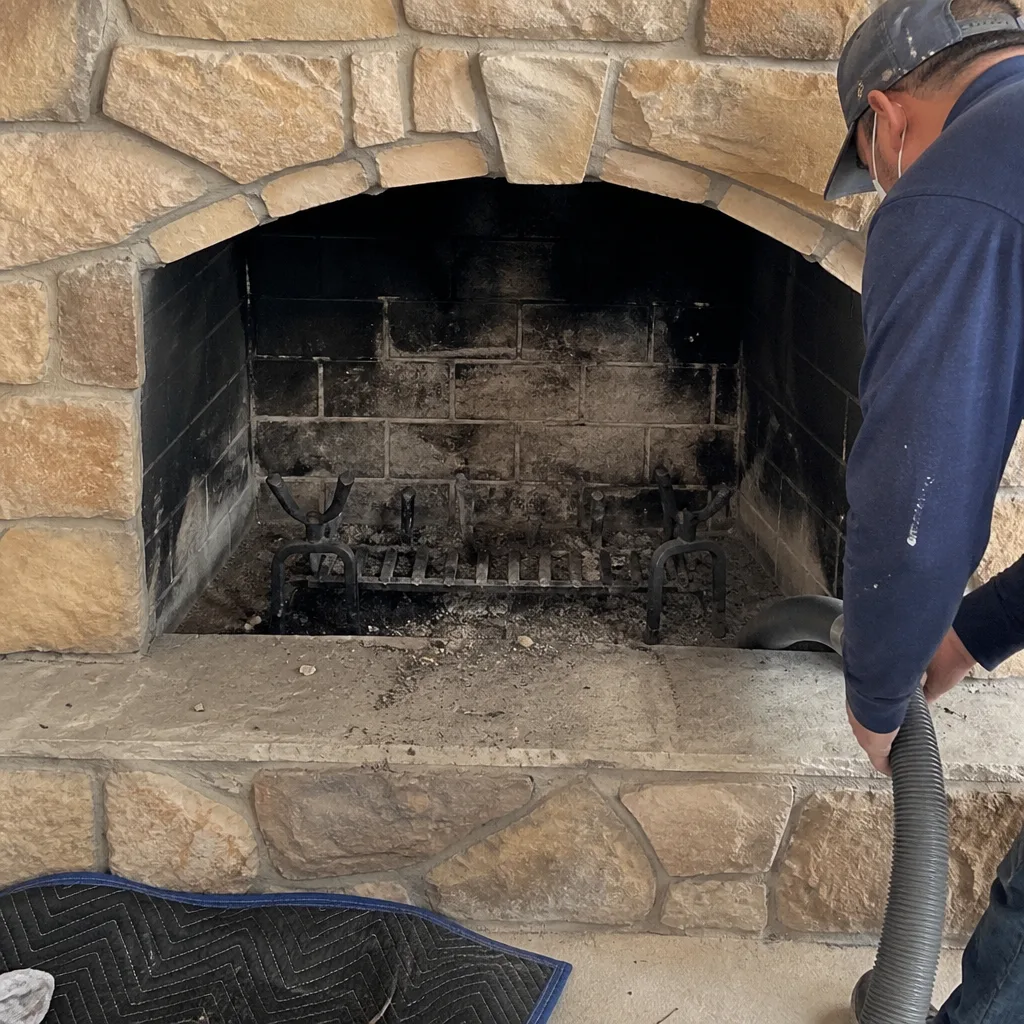
- Protect the room. Drop cloths on the hearth and floor, and a sealed plastic barrier at the firebox opening with a HEPA vacuum hose running through it. No soot escapes into the room.
- Inspect before sweeping. The technician looks at the firebox, damper, smoke shelf, and as much of the flue as is reachable with a light before touching anything. This step tells them what creosote stage they’re dealing with.
- Sweep the firebox and flue. Rotary whip or traditional brushes depending on the flue and creosote stage. The vacuum runs the entire time, capturing everything.
- Clean the smoke chamber and smoke shelf. The smoke chamber is the sloped area above the damper that funnels exhaust into the flue. It collects creosote like the flue does and needs its own cleaning.
- Camera the flue. If not bundled with the standard sweep, this is where the technician runs a camera up the flue to check the liner. Most reputable contractors now include at least a short camera run with the sweep.
- Check the firebox, damper, and cap. Look at the firebox walls for cracks, verify the damper opens and closes properly, and look at the cap and crown from the top or with a mirror.
- Write up the findings. A written report with photo documentation of anything the technician found that needs attention. This is the piece most missed by cheap quotes, and it’s the most valuable part of the visit.
We treat the sweep as the baseline service and the inspection as an inseparable companion to it. It’s the only way to know what you’re really paying for. Know exactly what’s happening inside your flue before the season starts, and the rest of the maintenance calendar is straightforward. If a fireplace needs more than a sweep, we move to fireplace repair once the flue is clean and inspected.
Portola Springs-Specific Considerations
Portola Springs sits in the foothills of the Santa Ana Mountains, and its winters are mild. That changes what chimney maintenance looks like compared to colder parts of the country. There’s no freeze-thaw cycle driving frost damage on masonry here, and no snow load to build against. But that doesn’t mean the chimney has an easy life.
What we see in Portola Springs homes is a different pattern:
- Creosote can build with intermittent use. Because the fires here tend to run on a few weeks of cool evenings rather than a full heating season, homeowners often have short, hot burns followed by long idle periods. That pattern produces more creosote glazing than steady-burning climates do, because the firebox stays cool between uses and doesn’t fully combust each burn.
- Insects and birds nest in uncapped flues year-round. The mild climate means chimney openings stay accessible to wildlife through most of the year. A properly sized chimney cap & crown is worth more here than in a colder climate because the nesting season is longer.
- Older masonry in the village area needs more attention than newer construction. The newer Portola Springs communities have modern framed chimneys with stainless liners. The older village-adjacent homes often have clay-tile flues with original liners. Those need camera inspection because clay tiles crack silently.
- The dry season stresses the crown. Summertime heat and dry air cause the crown (the concrete surface at the top) to shrink and crack. A cracked crown is the leading cause of water intrusion in this region because we get most of the annual rain in a short window. Crown repair is more valuable here than in wetter climates where moisture is constant.
- Fire season matters. If you live in the Portola Springs foothills, embers from a chimney are a serious concern during high-fire-risk months. A spark-arresting cap isn’t optional.
None of this changes the basic law of chimney maintenance. But it does shift the emphasis. And it’s why we recommend a camera inspection every two to three years even when the sweep looks clean; the liner can be failing without anyone knowing from the fireplace side.
Common Mistakes to Avoid
- Comparing quotes by headline price alone. A $150 quote without inspection and a $280 quote with camera documentation are not the same service. Always compare itemized quotes.
- Believing a chimney doesn’t need cleaning because you only burn a few fires a year. In Portola Springs we see the opposite – light, intermittent use creates glazed creosote faster than heavy use because the flue stays cold between burns.
- Letting a general handyman do chimney work. Chimney work requires specific tooling (HEPA vacuum, camera, rotary whip) and specific material knowledge. A handyman with a brush and a tarp is a liability on your flue.
- Booking the cheapest quote for a cap replacement. A box-store cap shimmed to fit your flue will leak and rust within a few seasons. A properly sized cap from Gelco or Famco will not. The materials gap isn’t cosmetic; it’s structural.
- Skipping the camera inspection because the visual looked fine. A visual Level 1 inspection cannot see past the first flue offset or around tile joints. Most liner cracks in Portola Springs homes are found by camera, not by eye.
- Assuming gas is maintenance-free. Gas fireplaces need vent checks, combustion analysis, and cleaning of the log and burner area. Skipping them can hide carbon monoxide risk.
- Waiting until the first cold snap to book. Chimney schedules fill fast from October through December. Book in September and you’ll get the date you want without a rush.
See the difference
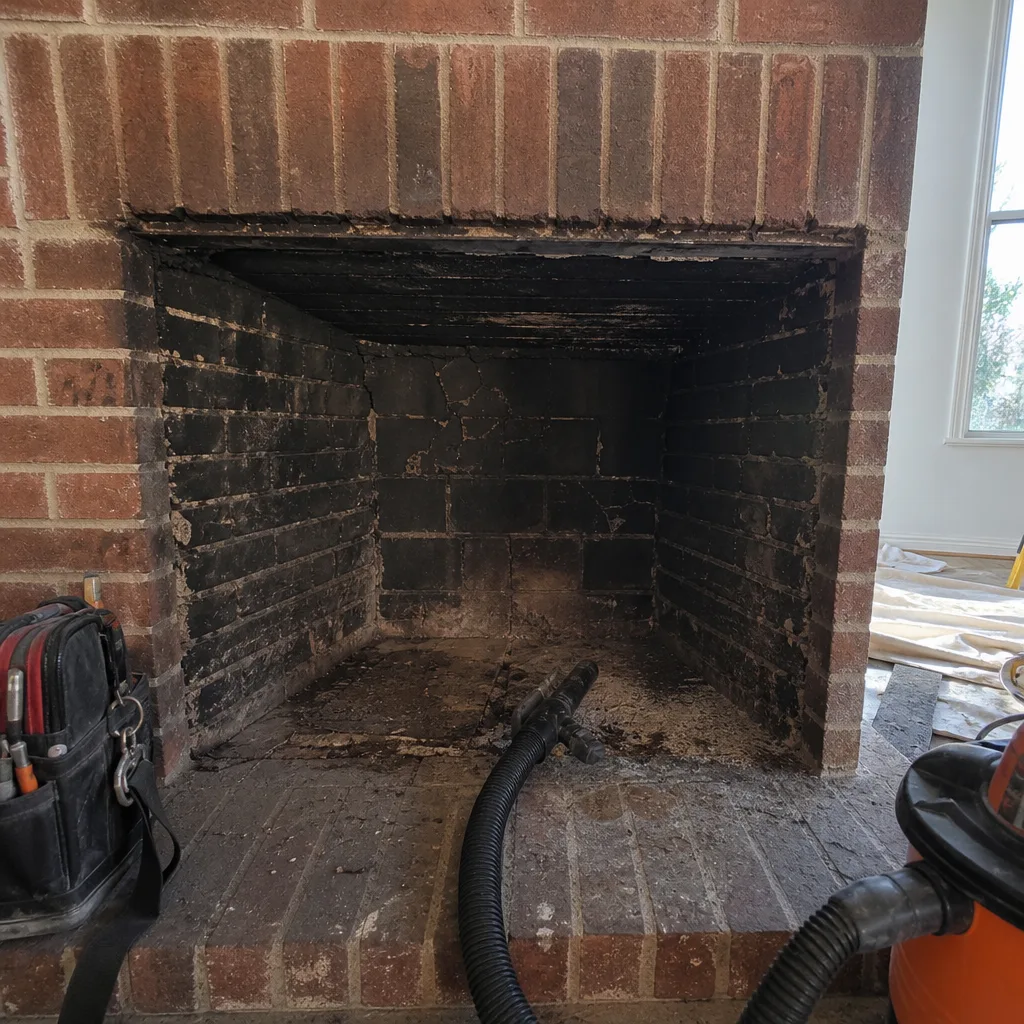 Before
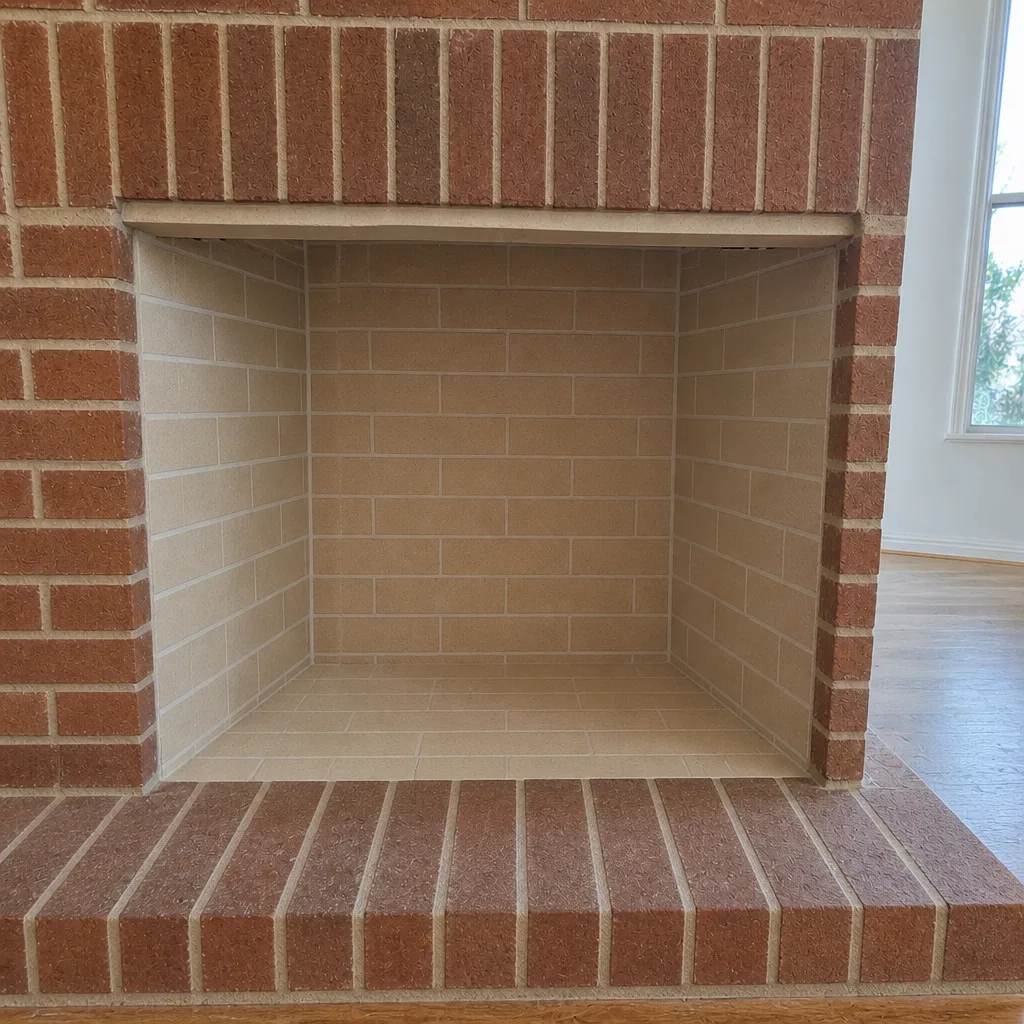 After
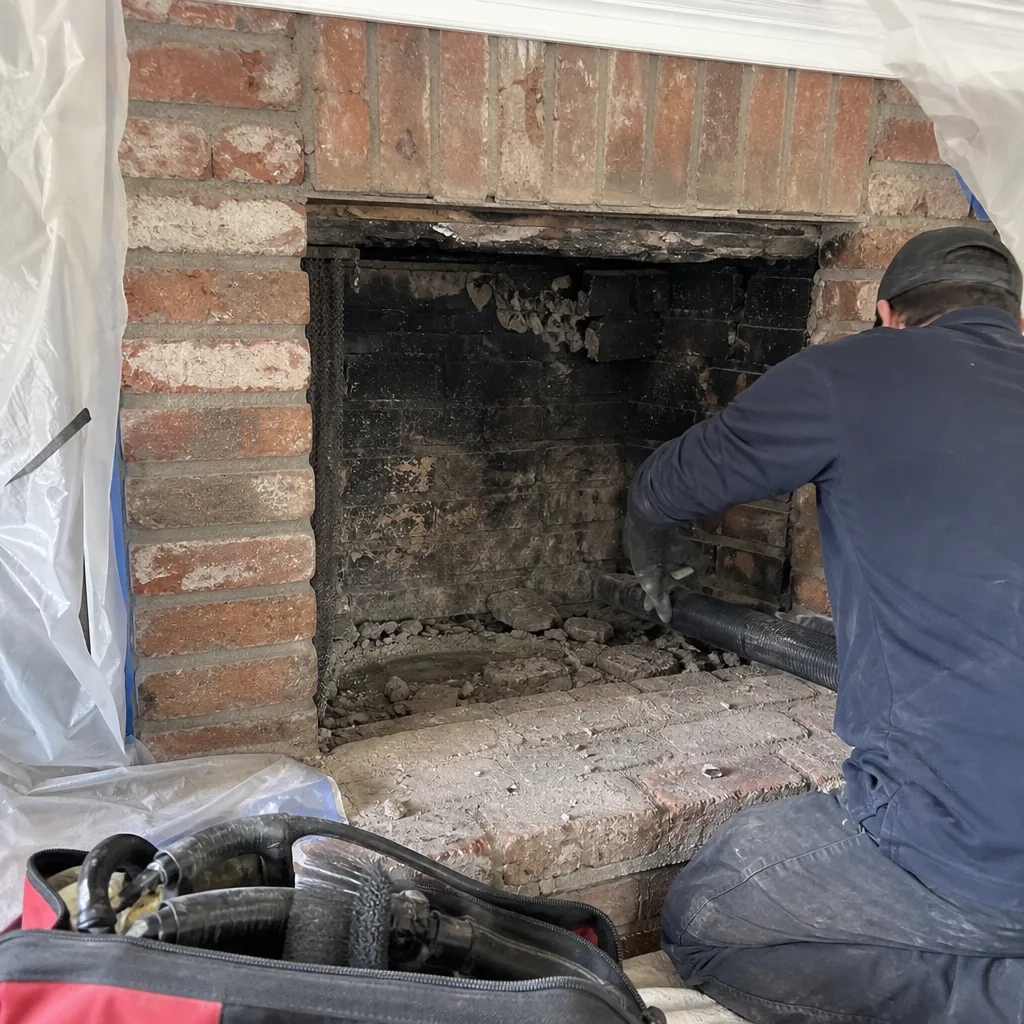 Before
 After
 Before
 After
When to Call a Professional
Call a professional chimney contractor in Portola Springs if you’ve never had the flue inspected and you use the fireplace at all; if you’ve noticed a strong smell in the house when the fireplace isn’t running (that’s a downdraft or blocked flue, not a hunch); if you’ve had any chimney fire, even a small one; if you’re seeing water stains on the ceiling near the chimney; or if a home sale or purchase is in process and a chimney inspection is on the disclosure list. Also call if a cap is missing or visibly damaged, or if you’re not sure when the flue was last swept. For anything involving the interior of the flue or the liner, work with a trained chimney technician rather than a general contractor or an ambitious DIY approach.
Chimney Sweep Portola Springs offers free estimates in Portola Springs. Call (855) 337-1632 to book a sweep or a standalone inspection; we’ll provide a written report even if no repair work is needed.
Frequently Asked Questions
A standard chimney sweep in Portola Springs typically costs between $180 and $340 in 2026 for a wood-burning flue, including a Level 1 visual inspection. Gas fireplace servicing runs lower, usually $140 to $260, because there’s no creosote removal. Camera inspection is typically an additional $90 to $175. Call (855) 337-1632 for an exact quote; estimates are free.
You need a new liner only if the existing flue is compromised – cracked, spalled, displaced joints, or unlined altogether. The way to know is with a camera inspection, which most reputable contractors now include. If the liner is intact and the joints are tight, resurfacing with a product like HeatShield is often enough. Ask to see the footage; any honest contractor will show it. Call (855) 337-1632 if you want a camera run without a full rebuild pitch.
Sweep once a year if you use the fireplace at all, and inspect every year regardless. In Portola Springs, intermittent use is the norm and creates Stage 3 creosote faster than heavy continuous use does, so an annual sweep is the safer baseline. If you burn seasonally with the fireplace closed the rest of the year, sweep before each season. Call (855) 337-1632 to book a sweep before the fall slowdown begins.
Creosote builds up to a quarter-inch and then a half-inch, glazes into a hard residue that’s harder to remove, and eventually can ignite as a chimney fire. Missing the inspection also means a liner crack may go undetected for multiple seasons. The cost to repair after three skipped seasons is often $1,200 to $3,200 for a resurfacing or relining, versus $150 to $250 annually for the sweep. Call (855) 337-1632 to get on the schedule.
The gap is usually about what’s included. A handyman quote often omits the Level 1 inspection report, the camera run, or both, and sometimes uses a shop vacuum instead of a HEPA unit. A chimney-specific contractor brings professional equipment, works with name-brand components (Gelco, Copperfield, DuraFlex, HeatShield) sized for your flue, and provides a written condition report. That’s the difference you’re paying for. Call (855) 337-1632 to see an itemized estimate.
Gas fireplaces need vent clearing, log and burner area cleaning, and a combustion check rather than a traditional sweep. There’s no creosote because there’s no wood smoke, but dust, lint, and insect debris can block vents and affect combustion. A combustion analyzer check catches carbon monoxide risk that a visual look won’t. Call (855) 337-1632 if you’re not sure when the gas fireplace was last serviced.
The Bottom Line
The price of a chimney cleaning in Portola Springs is really the price of three separate things: the sweep, the inspection, and the documentation. When you compare quotes on the sweep alone, you’re comparing the cheapest part of the job. When you ask each contractor to itemize those three elements and tell you what’s in each, the $79 quote and the $299 quote start to look very different. A proper quote includes a Level 1 inspection, offers camera verification of the liner, provides a written report, and uses materials sized and spec’d for your specific flue. Anything less isn’t a lower price, it’s a smaller job. Get a free estimate from a contractor that shows you the whole picture.
Related Reading
If you’re new to the area or scheduling your first sweep in Portola Springs, start with our overview of Chimney Sweep Portola Springs and what our chimney sweep service includes from start to finish. For repair work after inspection, we cover fireplace repair and cap and crown work on dedicated pages. Our technicians have up to 10 years of experience; when a camera run reveals a liner issue, we’ll walk you through the options in plain language.
Contact Us for a Free Estimate
Chimney Sweep Portola Springs handles the complete chimney system – sweep, inspection, cap and crown, repair, and fireplace work – from firebox to cap. Call (855) 337-1632. We answer 24/7. Fast dispatch from 7am to 7pm, Sunday through Friday. Estimates are free and itemized, and you’ll see exactly what each line covers before any work begins.
Written by the team at Chimney Sweep Portola Springs.